Which Car Odour Neutraliser Should You Choose?
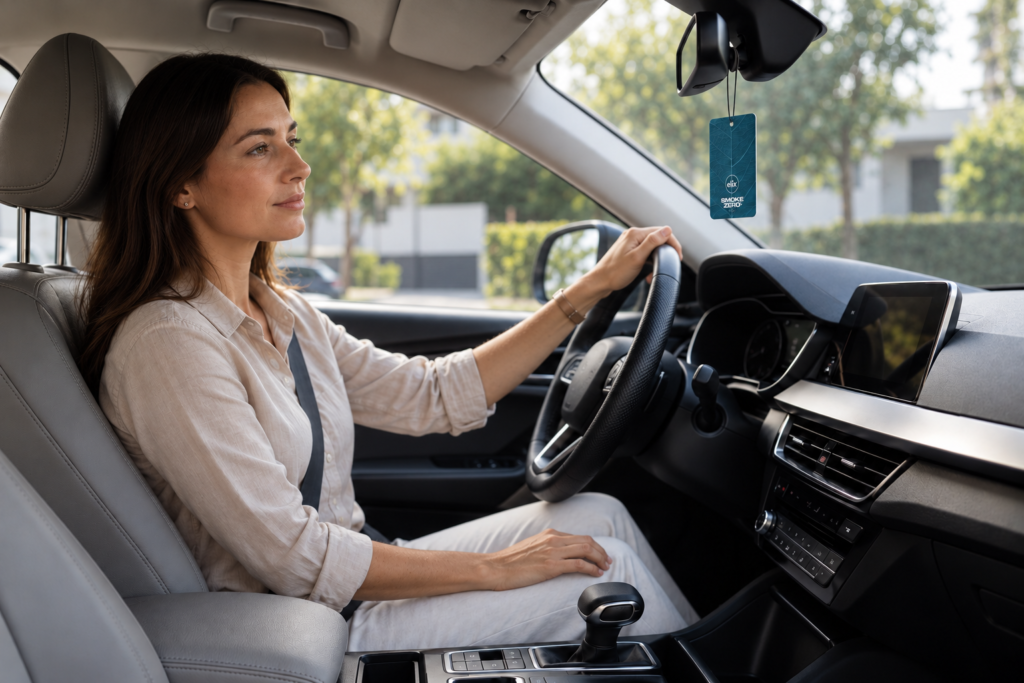
Cigarette smoke, food spills and journeys with pets can leave unpleasant smells in your car. Choosing the right product starts with identifying where the odour comes from and where it remains.
Choose a car odour neutraliser according to the source of the smell and its intended application. A spray for cabin air serves a different purpose from a treatment for fabric seats or mats. A hanging neutraliser offers a convenient option when you prefer a format without spraying.
What Is the Difference Between an Odour Neutraliser and an Air Freshener?
An air freshener primarily adds fragrance. It is useful when the interior is clean and you want a particular scent, such as citrus, vanilla or a woody composition.
An odour neutraliser is intended to reduce unwanted smells. Some products combine neutralising action with fragrance, so a neutraliser does not have to be fragrance-free.
Check the product’s stated function rather than choosing by its name or scent alone. Look for information about the odours it is intended to address, where it can be applied and how it should be used.
Match the Neutraliser to the Problem
Use the location and source of the smell to narrow down your choice.
| Your main concern | Product to consider | Why choose it? |
|---|---|---|
| Unwanted smells in the cabin | AQ Fresh Odour Eliminator 250 ml | A neutralising spray intended for vehicle interiors, with a choice of fragrances. |
| Odours in upholstery or mats | Absorber Odour Neutraliser 250 ml | A car-focused variant designed to neutralise odours in upholstery and mats. |
| Cigarette smoke in fabric seats or carpets | Smoke Zero 420 Fabric Spray 500 ml | A fabric treatment designed for smoke odours in textiles, including suitable car upholstery. |
| A compact spray for smoke-related odours | Smoke Zero 420 Mini Spray 75 ml | A portable format for tackling smoke-related odours when needed. |
| A smoke neutraliser without repeated spraying | Smoke Zero 420 Hanging Card | A hanging format designed for cars and small spaces, with a Very Cherry fragrance. |
| Pet-related odours after an accident on upholstery, mats or blankets | Oops 500ml | A foam formula for treating affected areas, designed to neutralise pet-related odours, including urine, faeces and vomit. |
For more detail on smoke-related applications, read our guide to choosing a smoke odour neutraliser.
Spray or Hanging Neutraliser?
Choose a spray when you want to control when and where you apply the product. Depending on its instructions, it may be intended for cabin air, suitable textiles or another specific application. A compact bottle is convenient for occasional use, while a larger format may suit more frequent treatment.
Choose a hanging neutraliser when you prefer a product that stays in the vehicle without repeated spraying. Check its stated purpose, because hanging products can have different functions.
The location of the odour should guide your decision. When a smell remains in fabric, cleaning and a treatment suitable for that material may be needed alongside a product used in the cabin air.
Remove the Source Before Treating the Smell
An odour neutraliser should complement cleaning. Start by removing rubbish, food packaging and damp items. Check beneath the seats and clean affected mats, blankets or upholstery according to their care instructions.
After travelling with pets, remove hair and clean any affected blankets, mats or upholstery. For odours left by urine, faeces or vomit, Oops Odour Neutralising Foam 500 ml is an option for compatible textiles. Remove visible contamination before applying it, follow the label instructions and test a hidden area first.
If a smell appears when you switch on the ventilation, the cabin filter or air-conditioning system may need attention. Persistent fuel or exhaust smells require investigation before using a neutraliser.
What Should You Check Before Buying?
Read the product label for application, ventilation, drying and storage guidance. Do not assume that a spray intended for the air is also suitable for seats, dashboard surfaces or screens.
For upholstery, check both the product instructions and the vehicle manufacturer’s care guidance. Test a small, hidden area first. Fabric, leather and synthetic leather have different requirements.
Also consider fragrance preference. A stronger scent does not necessarily mean better neutralisation, so choose the intended function first and then a fragrance you find comfortable.
Frequently Asked Questions
Can I spray a car odour neutraliser directly onto the seats?
Only if the instructions allow application to that upholstery material. Follow the vehicle manufacturer’s care guidance and test a small, hidden area first.
Will a hanging neutraliser remove a smoke smell from upholstery?
A hanging product does not replace cleaning or a suitable textile treatment when the smell remains in fabric. Choose the format according to where the odour lingers.
Why does the smell return after treatment?
The source may still be present, the affected area may need further cleaning, or the product may not suit the application. Recheck the cause before applying more product.
Does odour neutralisation also mean disinfection?
No. Do not assume a neutraliser disinfects surfaces unless it is specifically labelled for that purpose.
Does a neutraliser have to be fragrance-free?
No. Some neutralisers also leave a fragrance. Check the description if you prefer an unscented product or want a particular scent.
Choose an Odour Neutraliser That Fits Your Car’s Needs
Start by identifying the source, clean the affected area and choose a product intended for the place where the smell remains. This gives you a clearer basis for choosing between a cabin spray, a fabric treatment and a hanging neutraliser.
Browse the Airfresh24 odour neutraliser range and check each product’s intended use to find an option suited to your car.
Keep reading
More from the journal
-
 Odour Neutraliser vs Air Freshener: What’s the Difference?
An air freshener primarily adds fragrance to a room. An odour neutraliser is designed to tackle an unwanted smell. Some products do…
-
 How to Make Your Home Smell Good for Longer: 7 Simple Ways
A pleasant fragrance can change the atmosphere of an entire room. But even the best home fragrance will not have the same…
-
 How to Remove Smoke Smell from Clothes and Fabrics
Your jacket still smells of smoke after you’ve aired it. The living room feels fresh again, but the sofa and curtains smell…